
The Buyer’s Shadow: Why Your Home Inspection Should Be an Interactive Event
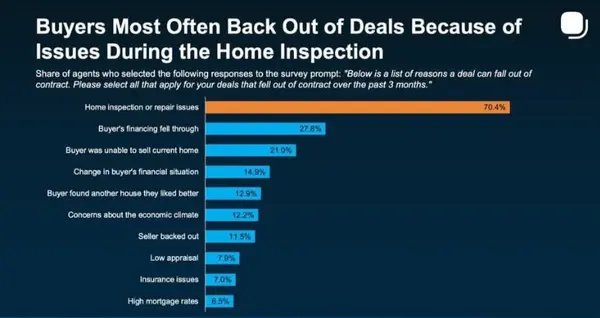
Buying a home is often the largest financial commitment you’ll ever make. Once you’ve survived the whirlwind of open houses, mortgage pre-approvals, and the high-stakes dance of the offer, you hit the "inspection contingency" phase. This is the moment of truth.
Many buyers treat the home inspection like a drop-off service—they hand over the keys, go grab a coffee, and wait for a 50-page PDF to hit their inbox 24 hours later. Don’t do that.
If you want to truly understand the bones of your future home, you need to become the inspector’s shadow. Here is why being present—and asking one specific, high-impact question at the end—is the smartest move you can make.
See the House Through a Professional Lens
A written report is a clinical document. It uses standardized language like "end of useful life" or "material defect." While accurate, these terms don't always convey the nuance of the situation.
When you follow the inspector (respectfully, of course), you get a live masterclass in your home’s health. You’ll see exactly where the water shut-off valve is, how to change the furnace filter, and what "minor settlement cracking" actually looks like.
-
Context matters: A report might say "signs of moisture in crawlspace." Seeing the inspector point to a tiny, dried water stain from five years ago feels much different than seeing active puddles.
-
Maintenance 101: Inspectors often share tips on how to prevent future issues. This "bonus" advice rarely makes it into the final written report.
The Art of Shadowing (Without Being a Nuisance)
There is a fine line between being an engaged student and being a distraction. To get the most out of the experience:
-
Let them work first: Don’t interrupt their flow while they are testing electrical outlets or crawling through the attic. Save your "Why is that like that?" questions for the transitions between rooms.
-
Wear your "grubbies": If the inspector is heading into the basement or looking at the exterior drainage, follow them. Wear clothes you don’t mind getting a little dusty.
-
Take your own notes: Use your phone to snap photos of the specific things they point out. When you read the report later, those photos will help you remember the "how" and "why" of the defect.
The Power of the "Big Three" Question
By the end of the four-hour marathon, your head will be spinning. The inspector has likely pointed out forty different things: a loose toilet, a cracked light cover, some peeling paint, and a missing GFCi outlet. To the untrained eye, the list looks like a disaster.
This is where you need to cut through the noise. Before the inspector packs up their ladder, look them in the eye and ask this exact question:
"In your opinion, what three items from your inspection today will be the most costly to fix?"
Why this question works:
Home inspectors are generally discouraged from giving repair estimates or telling you whether or not to buy a house. However, they are experts in severity. By asking for the "Top Three," you force them to prioritize the "scary" stuff over the "cosmetic" stuff.
-
It separates "Drip" from "Deluge": A leaky faucet is a $10 fix. A cracked heat exchanger in the furnace is a $5,000 fix. Both show up on the report, but only one should impact your negotiations.
-
It identifies structural/systemic risks: Usually, the "Big Three" involve the Roof, the Foundation, or the Major Systems (HVAC, Electrical, Plumbing).
-
It provides a negotiation roadmap: If the inspector identifies three major ticket items, you now have a focused list to bring to your real estate agent. Instead of asking the seller for twenty small repairs, you can ask for a credit or a fix for the three things that actually matter.
Turning Information into Action
Once you have your "Big Three," don't panic. Very few homes are perfect. Even brand-new constructions have "punch list" items. The goal of the inspection isn't to find a perfect house; it's to ensure you aren't walking into a financial trap.
When you receive the final written report, compare it to the "Big Three" the inspector mentioned in person. Use that clarity to decide your next move:
-
Proceed as is: If the costs are manageable.
-
Negotiate: Ask the seller to repair the major items or reduce the sale price.
-
Walk away: If the "Big Three" are structural nightmares that exceed your budget and risk tolerance.
The Bottom Line
Your home inspector is your greatest ally in the home-buying process. By shadowing them and asking for the "Big Three," you transform a scary, technical document into a clear, actionable plan. You aren't just buying a house; you're buying peace of mind.
This checklist is designed to help you stay organized while you shadow your inspector. It focuses on the "education" side of the walkthrough—the stuff that might not be highlighted in the formal report but is vital for you as the future homeowner.
🏠 The Home Buyer’s Inspection Shadow-List
1. The "Where is it?" Location Guide
Ask the inspector to point these out so you can label/photo them.
-
[ ] Main Water Shut-off Valve: (Crucial for preventing floods during a pipe burst).
-
[ ] Main Electrical Panel: (Find the "Main" breaker and check if labels are legible).
-
[ ] Gas Shut-off Valve: (Usually located at the exterior meter or leading to the furnace/water heater).
-
[ ] Sewer Clean-out: (The access point for clearing main line clogs).
-
[ ] Attic/Crawlspace Access: (Note where these are located, especially if they are hidden in closets).
2. System Vital Signs
Observe these during the walkthrough.
-
[ ] The HVAC Date: Look for the manufacture date on the furnace and AC. (Standard life is 15–20 years).
-
[ ] Water Heater Age: Check for rust at the base and the "born-on" date. (Standard life is 10–12 years).
-
[ ] Roof Condition: If they use a drone or ladder, ask: "Are there multiple layers of shingles?" or "Is there granular loss?"
-
[ ] Electrical Brand: Ask if the panel brand is a known fire hazard (e.g., Federal Pacific or Zinsco).
3. Red Flag Observations
Look for these while the inspector is testing.
-
[ ] Foundation: Look for "step-cracks" in brick or horizontal cracks in basement walls.
-
[ ] Grading: Does the dirt/land slope away from the house or toward it?
-
[ ] Odors: Do you smell "musty" or "earthy" tones in the basement? (Often indicates hidden mold/moisture).
-
[ ] Windows: Open and close several. Are they "foggy"? (This means the thermal seal is blown).
4. The "Big Three" Closing Questions
Wait until the end of the session to ask these high-value questions.
-
"In your opinion, what three items from your inspection today will be the most costly to fix?"
-
"If you were buying this house, which of these repairs would you want done before moving in?"
-
"Are there any areas you couldn't see today (due to furniture, snow, or locked doors) that I should be concerned about?"
Pro-Tips for the Walkthrough:
-
Bring a Tape Measure: While the inspector works, you can measure rooms for furniture.
-
Test the "Flow": Flush toilets while running the sink to check for pressure drops.
-
Silence is Golden: If the inspector looks focused, let them work. They will usually summarize their findings every 20-30 minutes.
Categories
Recent Posts