
From Pre-Approval to Closing: Buying a Utah Home
Buying a home is one of the most significant financial decisions you will ever make. Utah has distinct differences in contract law, disclosure requirements, and state-funded assistance programs from other states. This guide provides an overview of the home-buying process in the Beehive State.
1. Determining Financial Readiness
Before searching for homes, you must determine your "buying power." In Utah’s competitive market, most sellers will not consider an offer without a Pre-Approval Letter from a reputable lender.
A Pre-Approval Letter is a formal document from a mortgage lender stating exactly how much money they are willing to lend you based on a preliminary review of your creditworthiness. In a competitive market, this letter acts as your "golden ticket," proving to sellers that you are a serious buyer with the financial backing to close the deal.
To obtain one, you’ll need to provide your lender with comprehensive financial documentation, including:
-
Income Verification: Recent pay stubs and the last two years of W-2s.
-
Asset Documentation: Recent bank statements to prove you have funds for a down payment and closing costs.
-
Credit Check: The lender will perform a "hard pull" of your credit score to determine your interest rate and loan eligibility.
-
Tax Returns: Typically the last two years of personal (and business, if self-employed) federal returns.
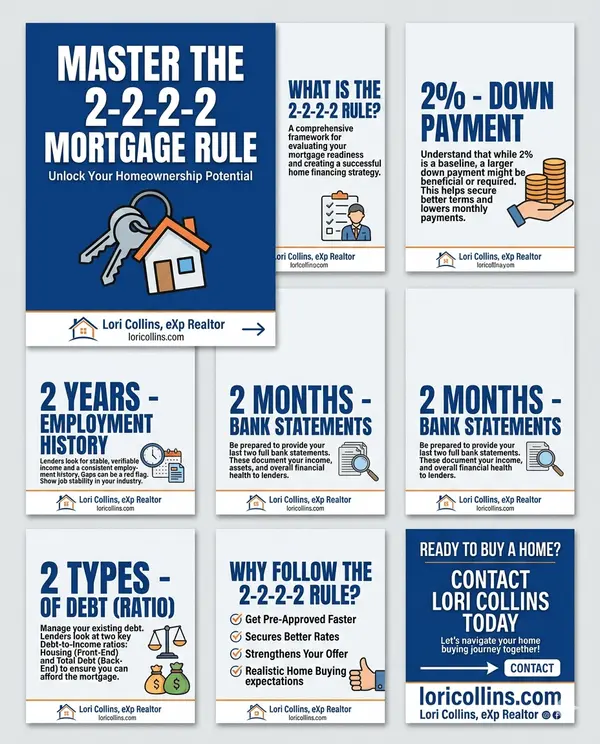
Debt-to-Income (DTI) ratio is a personal financial metric used by lenders to compare your total monthly debt payments against your gross monthly income. It is calculated by dividing your recurring monthly debts—such as car loans, student loans, and credit card minimums—by your pre-tax income.
Lenders use this percentage to measure your ability to manage monthly payments and repay borrowed money. For most conventional home loans in Utah, lenders prefer a "back-end" DTI of 36% to 43%, though some programs may allow for higher ratios depending on your credit score and down payment size.
The Utah First-Time Homebuyer Assistance Program (S.B. 240) is a state-funded initiative designed to make new construction more affordable by providing up to $20,000 in interest-free, payment-free assistance. These funds can be applied toward your down payment, closing costs, or a permanent interest rate buydown, though the home must be a newly built, never-inhabited property priced at or below $450,000.
How to Get and Use S.B. 240
To access these funds, you must be a first-time homebuyer (meaning you haven't owned a principal residence in the last three years) and have been a Utah resident for at least one year.
-
Step 1: Partner with a Participating Lender: You cannot apply for this directly through the state. You must work with a lender approved by the Utah Housing Corporation (UHC) who will determine your credit eligibility for a qualifying mortgage.
-
Step 2: Reserve Your Funds: Your lender will submit a reservation request to the UHC on your behalf. Since the $50 million program is first-come, first-served, it is best to do this as soon as you are pre-approved.
-
Step 3: Repayment Terms: This is not a traditional grant; it is a "soft" second (or third) mortgage. You do not make monthly payments, but you must repay the loan—either the original amount or 50% of your home's equity, whichever is less—when you eventually sell the home or refinance your primary mortgage.
2. Selecting Your Real Estate Team
In Utah, it is common for the buyer’s agent’s commission to be paid by the seller, though recent national settlement changes may require you to sign a Buyer Representation Agreement that outlines how your agent is compensated.
-
Licensing: Ensure your agent is licensed by the Utah Division of Real Estate (DRE).
-
Agency Disclosure: Your agent must explain "Limited Agency". In Utah, an agent can represent both parties only if both provide written, informed consent.
3. The Real Estate Purchase Contract (REPC)
Utah uses a standardized, state-approved Real Estate Purchase Contract (REPC). Warranty Deed or Special Warranty Deed are often used to convey title.
The Real Estate Purchase Contract (REPC) is the legally binding heartbeat of any Utah home acquisition. Unlike some states where contracts are drafted from scratch by attorneys, Utah real estate professionals use a standardized, state-approved form designed to protect both parties through clear deadlines and contingencies. However, its standardized nature does not mean it is simple; the REPC is a complex, multi-page document where a single misplaced date or missed checkbox can result in the loss of thousands of dollars in earnest money. Having an experienced Realtor guide you through this process is vital. They ensure that your specific terms—such as "Subject to Sale" contingencies or specific repair requests—are articulated correctly within the Addenda, and they manage the critical timeline of "Due Diligence," "Appraisal," and "Financing" deadlines to keep your deposit safe and your closing on track.
Understanding Title Conveyance in Utah
When you purchase a home, the seller must "convey" or transfer the title to you using a deed. In Utah, the type of deed used determines the level of protection you receive regarding the property's history.
-
Warranty Deed: This is the "Gold Standard" for buyers. It provides the highest level of protection, as the seller guarantees that the title is clear of any liens or encumbrances, not just during their period of ownership, but across the entire history of the property.
-
Special Warranty Deed: This is a more limited guarantee. The seller warrants only that they have not personally done anything to encumber the title during the time they owned the home. It does not provide protections against title issues that may have originated before the current seller took possession. This is frequently used in commercial transactions or by corporate sellers (like banks or builders).
Key Deadlines in the Utah REPC:
-
Earnest Money Deposit: Usually due within 4 calendar days of acceptance.
-
Due Diligence Deadline: The date by which you must complete all inspections and decide to move forward or cancel with a refund of your earnest money.
-
Financing & Appraisal Deadline: The date by which your loan must be fully approved.
4. Disclosure and "Due Diligence"
Utah is a "Buyer Beware" (Caveat Emptor) state, though sellers must still disclose known material defects using the Seller’s Property Condition Disclosure form.
Utah-Specific Inspections to Consider:
-
Radon Gas: Utah has some of the highest radon levels in the U.S. Testing is highly recommended.
-
Methamphetamine: Utah law requires disclosure if a property was used as a meth lab and hasn't been decontaminated.
-
Geological Hazards: If buying on a bench or mountainside, check for soil stability and flood zones.
5. The Closing Process
In Utah, "Closing" and "Settlement" are two different steps:
-
Settlement: You and the seller sign all documents at a Title Company (usually 1-2 days before you get keys).
-
Closing: This occurs once the lender funds the loan and the Title Company records the deed with the County Recorder.
-
Vesting: You will need to choose how to hold title (e.g., Joint Tenancy, Tenants in Common, or in a Trust).
6. Post-Purchase: The Primary Residence Exemption
Once you move in, ensure you apply for the Utah Primary Residence Property Tax Exemption. This reduces the taxable value of your home by 45%, significantly lowering your annual property tax bill compared to secondary residences or rentals.
How To Buy A House In Utah (13 Steps)
This video provides a detailed breakdown of the 13 essential steps for buying a home in Utah, specifically highlighting regional differences like the due diligence process and local inspection needs.
Categories
Recent Posts