
Here’s How Pricing Mistakes Can Cost You $40,000 (And How to Avoid Them)
When you decide to put your home on the market, the goal is almost always the same: sell for the highest possible price in the shortest amount of time. It sounds simple enough. However, many sellers fall into a common trap that actually yields the opposite result. They believe that by "testing the market" with a high price, they leave themselves room to negotiate.
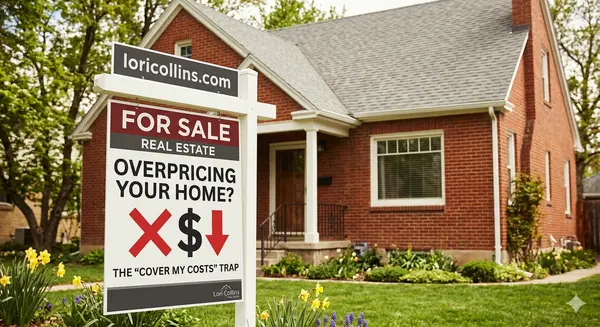
In reality, overpricing your home is the fastest way to leave money on the table. In today’s market, a pricing mistake isn't just a minor inconvenience—it can easily cost you $40,000 or more by the time the closing papers are signed.
Here is exactly how those pricing mistakes eat away at your equity and what you can do to protect your investment.
1. The "Death Spiral" of Price Reductions
When a home is priced correctly from day one, it generates immediate excitement. Buyers who have been waiting for new inventory pounce, often leading to multiple offers and a sale at or above asking price.
When you overprice, the opposite happens. Your home sits. After three weeks, buyers start asking, "What’s wrong with it?" To regain momentum, you eventually drop the price. But here’s the kicker: a price drop often needs to be significant to catch attention—usually $10,000 to $20,000 at a time.
By the time you’ve chased the market down with two or three price cuts, you’ve often dropped the price below what you would have received if you had priced it accurately at the start. Between the lost time and the "stale" reputation, that gap can easily hit the $40,000 mark.
2. The Appraisal Gap Trap
Let’s say you find a buyer willing to pay your inflated price. You’re thrilled—until the appraisal comes in.
Lenders will only provide a mortgage for the appraised value of the home, not the emotional value you’ve placed on it. If your home is priced at $550,000 but the appraiser says it’s worth $515,000 based on recent comparable sales, you have a $35,000 problem.
At this stage, the buyer often asks the seller to drop the price to the appraised value. If you refuse, the deal falls through, and you’re back to square one with a "Back on Market" label—which usually leads to even lower future offers.
3. Missing the "Golden Window"
Real estate data consistently shows that a listing gets the most views, clicks, and showing requests in the first 7 to 14 days. This is your "Golden Window."
When you overprice, you waste this period of peak interest. You aren't showing your home to the buyers who can afford it; you’re showing it to buyers in a higher price bracket who expect more features, more square footage, or a better location. Your home suffers by comparison, and you miss the very people who would have fallen in love with it. By the time you adjust the price to attract the right buyers, the "newness" has worn off, and those buyers have already moved on to other listings.
4. Increased Carrying Costs
Every month your home sits on the market because of a pricing error, you are paying:
-
Mortgage interest
-
Property taxes
-
Homeowners insurance
-
Utilities and maintenance
-
Landscaping and staging rentals
If it takes an extra four or five months to sell a home because it started too high, those carrying costs can easily total $10,000 to $15,000. When you add that to the lower eventual sales price, the $40,000 loss becomes very real, very quickly.
5. Lost Negotiating Power
A correctly priced home creates a sense of urgency. Buyers feel they have to put in a strong, clean offer to beat out the competition.
An overpriced, stale home creates the opposite environment. It gives the buyer all the leverage. They know you’re getting desperate. They know the home has been sitting. This leads to "lowball" offers and aggressive demands during the inspection period. When a seller is exhausted from months of waiting, they are much more likely to concede thousands of dollars in repairs just to get the deal done.
How to Get It Right
The market doesn’t care what you need to net for your next move, or how much you spent on the kitchen remodel five years ago. The market only cares about what a willing buyer will pay today.
To avoid the $40,000 mistake, you need:
-
A Data-Driven CMA: A Comparative Market Analysis that looks at sold data, not just what your neighbors are currently asking.
-
Objectivity: Viewing your home as a product, not a collection of memories.
-
Strategic Pricing: Sometimes, pricing $5,000 under market value creates a bidding war that drives the final price $20,000 over market value.
Final Thoughts
At LoriCollins.com, my goal is to protect your equity. Pricing a home is part science and part art, and getting it right from the start is the best way to ensure you walk away from the closing table with the most money possible in your pocket.
Ready to find out what your home is actually worth in today's market? Contact me today for a comprehensive valuation and a strategy to get you sold!
Categories
Recent Posts