
The "Fixer-Upper" vs. The Money Pit: Red Flags Every Buyer Needs to Spot
Falling in love with a house is easy. The sunlight hits the breakfast nook just right, the curb appeal is charming, and suddenly you’re mentally placing your sofa in the living room. But before you let your heart sign the mortgage, you need to put on your "investigator" hat.
There is a massive difference between a fixer-upper (cosmetic updates like paint and carpet) and a money pit (structural or systemic failures). If you’re touring a listing and notice these signs, the house likely needs substantial—and expensive—work.
1. The Foundation: Looking for the Literal Cracks
The foundation is the most critical part of the home. While small "settling" cracks are common in older houses, certain patterns indicate a structural nightmare.
-
Horizontal Cracks: If you see horizontal cracks in the basement walls, be wary. This often suggests hydrostatic pressure from the soil is pushing the walls inward.
-
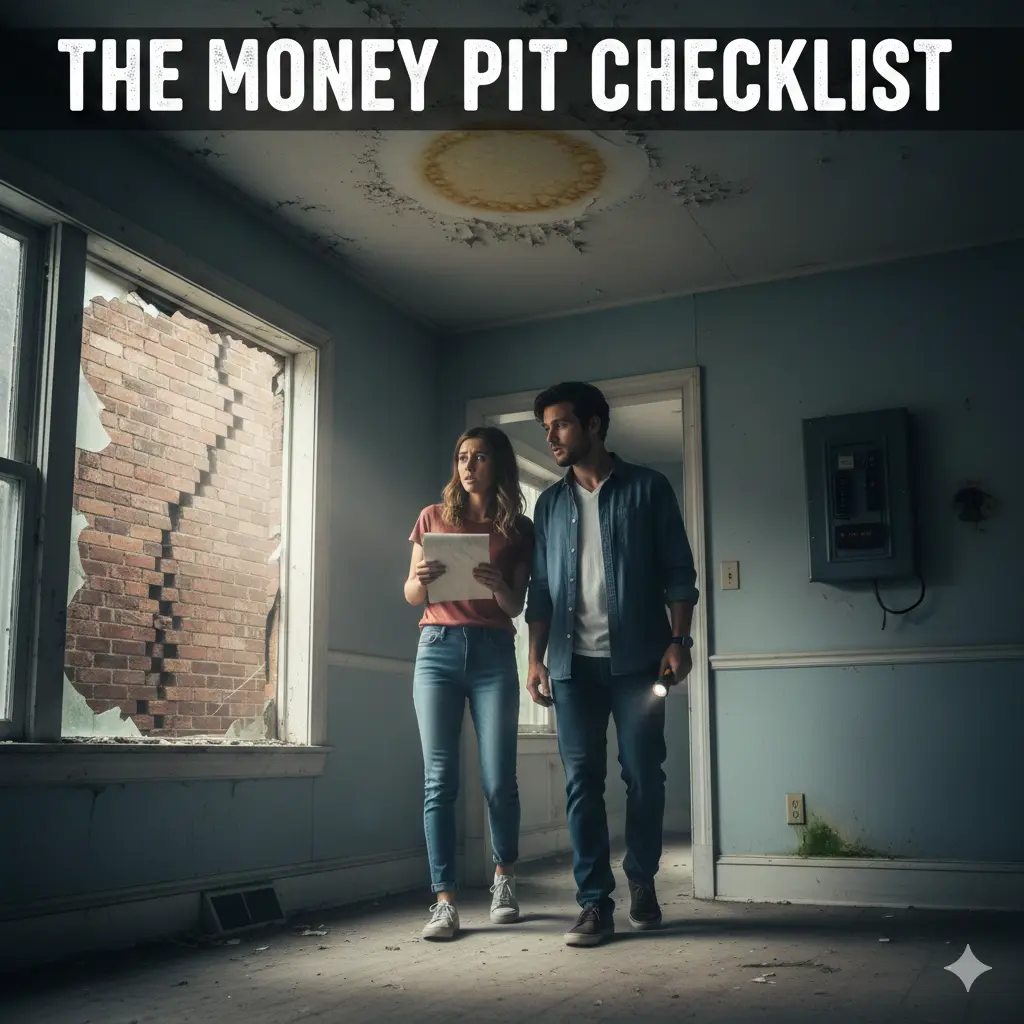
Stair-Step Cracks: Look at the exterior brickwork. Cracks that follow the mortar line in a zig-zag "stair" pattern often signal a foundation that is shifting or sinking unevenly.
-
Doors That Won’t Close: If the bedroom doors stick or the frames look slanted, the house might be "heaving" or settling significantly.
2. The "Fresh Paint" Distraction
Sellers often apply a fresh coat of "flip gray" paint to make a house look move-in ready. However, paint can be a mask.
-
Ceiling Stains: Look for yellowish or brown rings on the ceiling. Even if they feel dry to the touch, they indicate a history of roof leaks or plumbing failures.
-
Bubbling or Peeling: If paint is bubbling near window frames or baseboards, moisture is likely trapped behind the drywall. This is a calling card for rot and mold.
3. Electrical Archeology
In a modern world filled with EVs, air conditioners, and high-end appliances, an outdated electrical system isn't just an inconvenience—it’s a fire hazard.
-
The Service Panel: If you open the electrical box and see a "Federal Pacific" brand label or old-fashioned glass fuses instead of switches, you’re looking at a full system replacement (often costing $3,000–$6,000+).
-
Two-Prong Outlets: This indicates the home lacks a dedicated grounding wire. Rewiring a whole house to meet modern code is a massive undertaking that involves cutting into walls.
4. The Smell Test
Your nose is often a better inspector than your eyes.
-
Musty/Damp Odors: A persistent earthy smell in the basement or crawlspace usually means a drainage issue. Fixing a "wet basement" often requires exterior excavation or expensive internal French drains.
-
Sewer Gas: A faint scent of rotten eggs near drains could mean a cracked vent stack or a failing sewer line.
-
Masking Scents: If the house is overwhelmed by the smell of four different scented candles or heavy air fresheners, ask yourself: What are they trying to hide?
5. Roof and Gutter Red Flags
Replacing a roof is one of the single largest expenses a homeowner will face. You don't always need a ladder to see the signs of aging.
-
Curling Shingles: If the edges of the shingles are turning upward (cupping), they have reached the end of their lifespan.
-
The "Lumpy" Roof: If the roof line looks wavy or lumpy, it may indicate that the plywood decking underneath is rotting or that a new layer of shingles was illegally installed over an old one.
-
Granules in the Gutters: Look at the bottom of the downspouts. If you see piles of sand-like grit, the shingles are disintegrating.
6. Windows: The Invisible Expense
Old, single-pane windows or those with "fogged" glass (blown seals) are massive energy drains. While they don't seem like a "structural" issue, replacing every window in a standard three-bedroom home can easily cost $15,000 to $30,000. If they don’t open easily or are painted shut, consider it a sign of long-term neglect.
The Bottom Line: Know Your Limits
None of these signs mean you shouldn't buy the house. They simply mean you shouldn't pay top dollar for it. If you spot these red flags, your next step should always be a specialized inspection (structural engineer, plumber, or electrician) to get hard numbers.
Remember: You can change the kitchen cabinets later, but you can't easily change a sinking foundation or a fire-prone electrical grid.
Pro Tip: Always check the "slope" of the yard. If the ground slants toward the house instead of away from it, every rainstorm is a potential flood waiting to happen.
Are you worried about a specific issue you saw during a recent walkthrough? I can help you draft a list of targeted questions to ask your home inspector or real estate agent.
Here is a concise, printable-style checklist you can take with you to your next showing. Use this to track the "health" of the property as you walk through.
The Home Buyer’s Red Flag Checklist
Exterior & Foundation
-
[ ] Stair-step cracks in exterior brick or mortar.
-
[ ] Horizontal cracks along the foundation or basement walls.
-
[ ] Significant leaning of porch columns or chimneys.
-
[ ] Negative grading: The yard slopes toward the house rather than away.
-
[ ] Standing water or soggy patches near the foundation.
Roof & Gutters
-
[ ] Curling or "cupped" shingles (indicates end-of-life).
-
[ ] Wavy or lumpy roofline (suggests rotting roof deck).
-
[ ] Missing flashing around chimneys or vents.
-
[ ] Granule buildup (sand-like grit) at the base of downspouts.
-
[ ] Plants growing in gutters (indicates long-term neglect).
Interior & Structural
-
[ ] Sticking doors/windows that won't close or latch properly.
-
[ ] Sloping or "bouncy" floors (check for a gap between baseboards and floor).
-
[ ] Ceiling/wall stains (yellow or brown rings).
-
[ ] Fresh patches on the ceiling that don't match the surrounding texture.
-
[ ] Bubbling paint or wallpaper near windows and baseboards.
Systems (Electrical & Plumbing)
-
[ ] Outdated panel: Look for "Federal Pacific" or "Zinsco" brands (known fire hazards).
-
[ ] Fuses instead of breakers: Indicates an ancient electrical system.
-
[ ] Two-prong outlets: Suggests the house lacks modern grounding.
-
[ ] Low water pressure: Turn on the shower and sink simultaneously to test.
-
[ ] Discolored water: Rust-colored water suggests aging galvanized pipes.
The "Nose" Test
-
[ ] Musty/mildew scent in the basement or crawlspace.
-
[ ] Sewer gas smell near drains or in the backyard.
-
[ ] Overpowering air fresheners (could be masking pet urine, smoke, or mold).
Categories
Recent Posts