
Renting vs. Buying in 2026: Navigating the New Housing Landscape with an example of a rent or buy calculation
In 2026, the age-old debate of renting versus buying has shed its simplicity. We are no longer in the era of sub-3% interest rates or the frantic over-asking bids of the early 2020s. Today’s market is characterized by a "thaw"—a period of stabilization where inventory is slowly returning, and price growth has settled into a predictable 1-2% annual rhythm.
If you are standing at the threshold of this decision, the question isn’t just "What can I afford?" but "What does home mean to me right now?"
The Case for Renting: The Luxury of Flexibility
Renting is often unfairly dismissed as "throwing money away." In 2026, renting is a strategic tool for those who value mobility. With remote work remaining a staple for many, the ability to pack up and move to a new city without the six-month ordeal of selling a property is a significant asset.
Financially, renting in 2026 can be a savvy move for those who want to keep their capital liquid. A down payment on a median-priced home is a substantial sum. If that money is instead diverted into a diversified investment portfolio, the long-term returns can, in some market cycles, rival or exceed home equity—especially when you factor in the "unrecoverable costs" of ownership like property taxes, homeowners insurance, and the inevitable 11:00 PM water heater failure.
The Case for Buying: Building Tangible Wealth
Conversely, homeownership remains the most reliable "forced savings account" for the average American. While mortgage rates have stabilized around the 6% mark, they still allow you to lock in your largest monthly expense. In a rental market where landlords can—and often do—raise the rent annually, a fixed-rate mortgage acts as a powerful hedge against inflation.
Beyond the math, there is the psychological "pride of ownership." Buying in 2026 means you are no longer asking for permission to paint a wall, plant a garden, or adopt a pet. You are creating a space that is truly yours. Furthermore, for those looking at the long game, the tax advantages—including mortgage interest deductions—continue to provide a financial cushion that renters simply don't have access to.
The Five-Year Rule
If there is one "golden rule" for 2026, it is the time horizon. Because the upfront costs of buying—closing fees, inspections, and moving expenses—are so high, you generally need to stay in a home for at least five years to "break even." If your career or relationship status feels like it might change in the next 24 to 36 months, renting is almost always the mathematically superior choice.
Making Your Move
Ultimately, the "right" choice depends on your specific zip code and your personal balance sheet. A house in the Northeast might appreciate differently than a condo in the Sunbelt. Before you sign a lease or a mortgage application, it is essential to run the numbers for your specific scenario.
You can use a rent or buy calculator to plug in your local taxes, expected appreciation, and current rent to see exactly where your "break-even" point lies. Data-driven decisions are the only way to navigate a market as complex as 2026. Whether you choose the flexibility of a lease or the stability of a deed, ensure your choice aligns with where you want to be—not just next year, but five years from today.
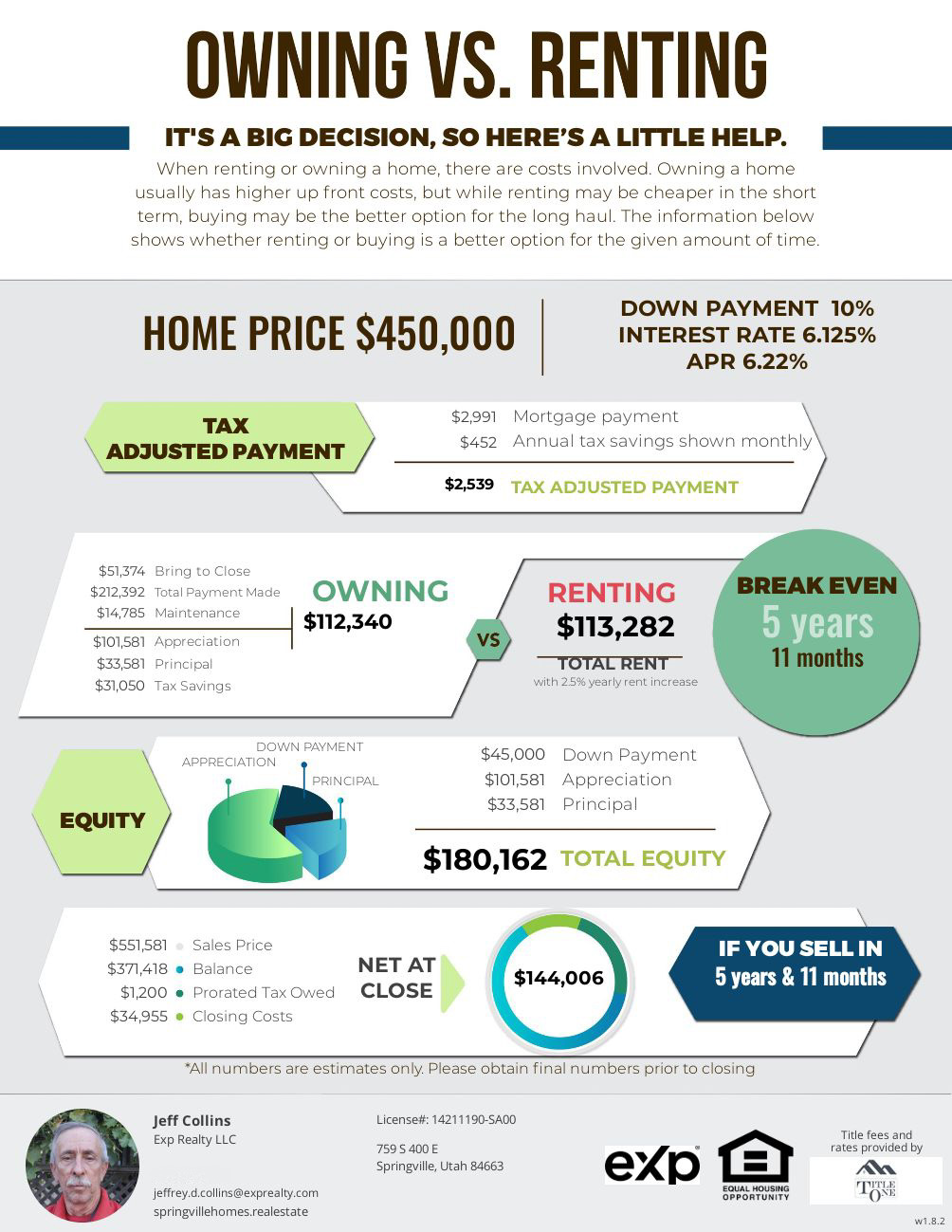
Here is an example of rent or buyer calculator. Compares renting at $1500 / month vs buying a $450,000 home with adjustments for taxes, home and rent appreciation estimates. It shows the breakeven time requires you to stay in the home 5 years and 11 months. Staying longer favors buying and staying shorter favors continuing to rent.
This video provides a practical, updated comparison of the financial and lifestyle factors of the 2026 housing market to help you decide which path is right for you.

Categories
Recent Posts