
Palmyra, Utah: A Story of Resurrection and Rural Resilience
Just northwest of Spanish Fork and west of Springville lies Palmyra, a community that carries one of the most storied names in Utah’s history. For many, "Palmyra" evokes the birthplace of a global faith in New York, but for those in Utah County, it represents a landscape of persistence—a town that was settled, abandoned, and then reclaimed by the land and its people.
Today, Palmyra is a quiet, rural enclave where the agricultural heritage of the valley is still very much alive.
📖 The Town That Wouldn’t Quit: The History of Palmyra
Palmyra's history is a dramatic tale of early pioneer struggle. Settled in 1851 by Mormon pioneers led by William Pace, it was originally intended to be a major hub.
The Rise and Fall of the First Fort
In 1852, Apostle George A. Smith selected the site on the banks of the Spanish Fork River as a suitable place for a city. By 1853, due to tensions during the Walker War, settlers built Fort Palmyra for protection. However, the pioneers faced an unexpected enemy: the soil.
As they irrigated the land, a high water table caused mineral salts (alkali) to rise to the surface, making farming nearly impossible. On the advice of Brigham Young in 1856, the majority of the settlers abandoned the site and moved to higher ground, founding what is now Spanish Fork.
The Return
Palmyra didn't stay a ghost town for long. By the mid-1870s, as drainage techniques improved, families began moving back to the fertile river bottom lands. In 1901, Palmyra was formally organized as an independent ward, cementing its status as a permanent and proud community separate from its larger neighbor.
🏞️ Hidden History: Interesting Areas In & Around Palmyra
Palmyra is a place where history is literally written into the landscape.
-
The Old Palmyra Fort Marker: You can still visit the monument marking the southwest corner of the original 1853 fort. It stands as a silent tribute to the "stalwart pioneers" who first tried to tame this bend in the river.
-
The Spanish Fork River Trail: This beautiful, winding trail passes right through the Palmyra area. It’s perfect for a morning jog or a quiet walk, offering views of the river that once powered the town's first mills.
-
Utah Lake Shoreline: The northern boundary of Palmyra reaches the wetlands of Utah Lake. This area is a haven for local wildlife and offers some of the best sunset views over the water in the entire county.
-
Holt Farm: A beautiful example of the historic farmsteads that define the area, reminding visitors of the deep agricultural roots that brought settlers back to this land a century ago.
🎉 Community & Culture: Local Events for 2026
While Palmyra is a peaceful residential and farming area, it sits in the heart of the action for Southern Utah County's 2026 event season.
2026 Regional Highlights:
-
Holi Festival of Colors (March 28–29, 2026): Held at the nearby Krishna Temple in Spanish Fork, this vibrant celebration of spring is just minutes away for Palmyra residents.
-
Spanish Fork Fiesta Days (July 2026): As a close neighbor to Spanish Fork, Palmyra residents are often found at the center of the "Pyromusical" fireworks and world-class PRCA rodeos.
-
Payson Golden Onion Days (August 28 – September 1, 2026): A short drive south takes you to this classic Labor Day weekend festival.
-
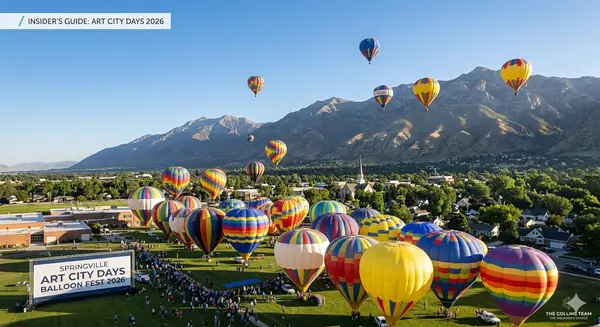
Springville Art City Days (June 2026): Located directly east, Springville’s signature summer festival offers parades and balloon fests that Palmyra families have enjoyed for generations.
👨👩👧👦 A Tight-Knit Enclave: Population & Demographics
Palmyra remains one of the most exclusive and quiet residential pockets in the Utah Valley.
-
2026 Estimated Population: 313 residents.
-
Demographics: Palmyra is a mature, stable community with a median age of 57.2 years. It is a place where people come to stay, often tending to multi-generational family land.
-
Economic Profile: The community is prosperous, with a median household income of $97,188 and a 0% poverty rate.
-
The Lifestyle: 100% of the population identifies as living in a family household, reflecting a deeply connected community where neighbors are often lifelong friends.
Categories
Recent Posts