
The "Two-Pipe" State: Understanding Secondary vs. Culinary Water in Utah
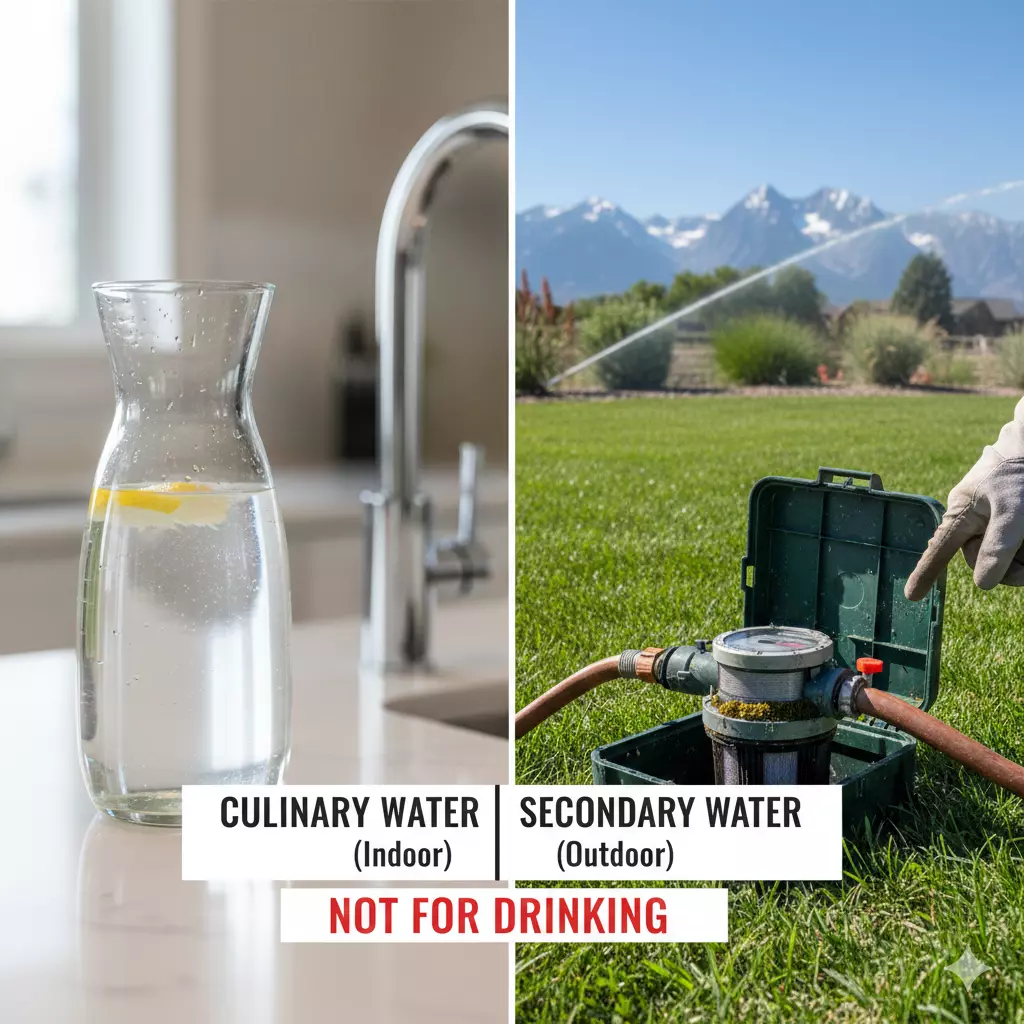
If you’ve recently moved to Utah, you may have noticed something peculiar in your front yard: two different water meters, or perhaps a mysterious green plastic lid near the sidewalk that looks different from your standard water shut-off.
Utah is one of the few places in the country that heavily utilizes a "dual-water" system. To keep our high-desert landscapes green without draining our drinking water reserves, most Utah municipalities split their water into two categories: Culinary and Secondary.
Understanding which one you are using isn’t just a matter of curiosity—it impacts your wallet, your health, and the lifespan of your sprinkler system.
1. Culinary Water: The Gold Standard
Culinary water is exactly what it sounds like—water safe for the kitchen. This is high-quality, treated water that comes from deep wells or protected mountain springs. It goes through a rigorous filtration and chemical treatment process to ensure it meets EPA drinking water standards.
-
Usage: Used for drinking, bathing, cooking, and indoor appliances.
-
Availability: Available 24/7, 365 days a year.
-
Cost: This is your most expensive water. Because of the cost of treatment, using culinary water to soak a large lawn in July can result in a staggering monthly bill.
2. Secondary Water: The Landscape Workhorse
Secondary water (often called Pressurized Irrigation or PI) is untreated, non-potable water. It is pulled directly from canals, rivers, and reservoirs like the Jordan River, Deer Creek, or Utah Lake. Instead of going to a treatment plant, it is pumped directly through a separate set of "purple pipes" (the universal color for non-potable water) to your yard.
-
Usage: Specifically for lawns, trees, and gardens.
-
Availability: Seasonal. Most Utah cities turn the secondary system on in mid-to-late April and shut it down by mid-October.
-
Cost: Significantly cheaper than culinary water. Many cities charge a flat monthly fee or a much lower tiered rate for secondary usage.
The Three Golden Rules of Utah Water
Rule #1: Never Cross-Connect
This is the most important rule for Utah homeowners. Your indoor (culinary) and outdoor (secondary) plumbing systems must remain completely separate. It is illegal to connect the two. If secondary water backflows into the culinary lines, it can contaminate the drinking water for your entire neighborhood with bacteria, parasites, or debris.
Rule #2: It is Not for Playing
Because secondary water is untreated, it can contain "natural" hitchhikers like algae, moss, snails, and runoff bacteria.
-
Warning: Do not fill swimming pools or "kiddy" pools with secondary water.
-
Safety: Discourage children and pets from drinking from garden hoses or running through sprinklers if your home uses a secondary system.
Rule #3: The "Filter" Factor
Since secondary water isn’t filtered by the city, it carries sediment and organic matter. Most Utah homes with a PI system have a secondary water filter (usually a large canister near the main shut-off valve).
-
Pro-Tip: If your sprinkler pressure suddenly drops, don't call a repairman yet—check your filter! Most Utahns need to clean their secondary filter at least once a month during the summer to keep their zones running efficiently.
Is Secondary Water Available at Your House?
Not every home in Utah has access to secondary water. While newer developments in cities like Springville, Lehi, and South Jordan are almost entirely plumbed for secondary water, older "bench" neighborhoods or historic districts often still rely on culinary water for everything.
How to tell:
-
Look for the Lid: Check your park strip or property line. If you see a green or purple plastic lid (often labeled "Irrigation" or "Secondary"), you have it.
-
Check Your Bill: Look at your municipal utility statement. If you see a line item for "Pressurized Irrigation" or "Secondary Water," you’re connected.
-
The April Test: If you turn on your sprinklers in early April and nothing happens, but your kitchen sink works fine, you are likely on a seasonal secondary system that hasn't been "charged" yet for the spring.
Summary Table
| Feature | Culinary Water | Secondary (PI) Water |
| Safe to Drink? | Yes | No |
| Treated? | Yes (Filtered & Chlorinated) | No (Raw Surface Water) |
| Availability | Year-round | Seasonal (April – Oct) |
| Primary Use | Indoor / Drinking | Outdoor / Irrigation |
| Cost | High | Low |
Conclusion
Utah’s dual-water system is a brilliant solution to living in the second-driest state in the nation. It allows us to maintain beautiful outdoor spaces while preserving our pristine spring water for the dinner table. By knowing which system you’re using, you can save money, protect your family’s health, and help Utah conserve its most precious resource.
Categories
Recent Posts