Fire-Proofing the Beehive State: What HB 48 Means for Your Home and Your Wallet
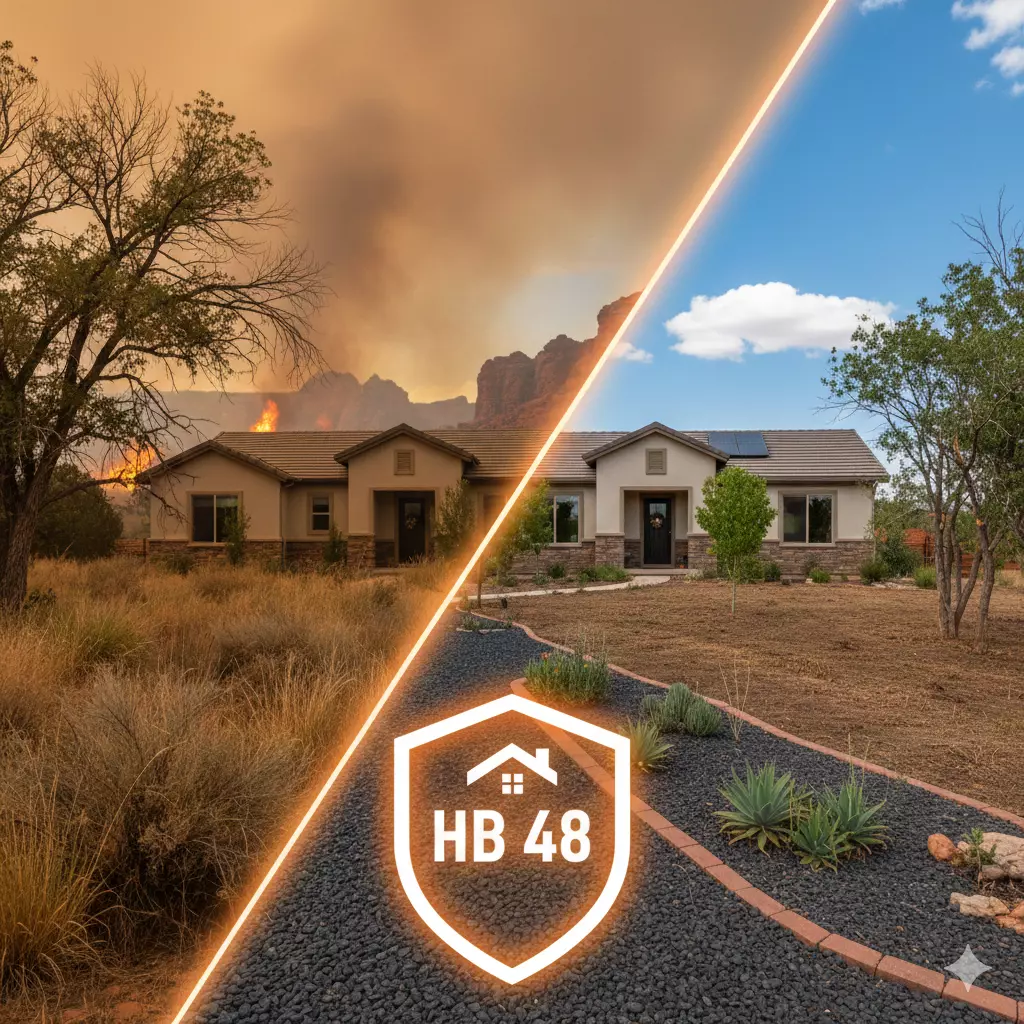
In Utah’s high desert and mountain landscapes, the beauty of the "Wildland-Urban Interface" (WUI)—where neighborhoods meet nature—is undeniable. However, as recent seasons have shown, this beauty comes with a growing risk. In response to the increasing threat of catastrophic wildfires, the Utah Legislature passed House Bill 48 (HB 48): Wildland Urban Interface Modifications during the 2025 General Session.
For homeowners in fire-prone areas, this isn’t just another piece of jargon-heavy legislation; it is a major shift in how the state manages fire risk, property fees, and insurance transparency. Here is a breakdown of what HB 48 means for you and the future of Utah’s communities.
Why Now? The Changing Landscape of Fire
In recent years, states across the West have seen a surge in "mega-fires" that do more than burn trees—they level neighborhoods. Utah is not immune. HB 48 was designed to move the state from a reactive stance (fighting fires when they start) to a proactive stance (preparing homes before the sparks fly).
The core philosophy of HB 48 is shared responsibility. It acknowledges that while the state and counties manage forests, homeowners play a critical role in "hardening" their properties to prevent a small brush fire from turning into a total loss.
The High-Risk Map and New Fees
The most immediate impact of HB 48 is the creation of a statewide High-Risk Wildland-Urban Interface boundary map. Maintained by the Utah Division of Forestry, Fire and State Lands (FFSL), this map identifies roughly 60,000 structures statewide that are most vulnerable based on topography, vegetation, and historical fire patterns.
What does this cost?
If your property falls within this high-risk boundary, you will notice a new fee on your property assessment. Here is the timeline:
-
2026–2027: A flat fee (ranging from approximately $20 to $100) will be assessed based on the square footage of the taxable structures on your property.
-
2028 and Beyond: The fee structure will shift to a "triage" model. Your fee will be determined by both your home’s size and its specific risk score.
The money collected doesn't go into a general fund; it is specifically earmarked for wildfire prevention, mapping, and providing lot assessments to help homeowners improve their safety.
The "Triage" System: Lot Assessments
One of the most innovative parts of HB 48 is the lot assessment program. Think of this like a "fire safety audit" for your home. Homeowners in high-risk areas can request a certified assessor to visit their property and provide a triage score based on two factors:
-
Defensible Space: How much flammable vegetation is cleared away from the house?
-
Home Hardening: Are the roof, vents, and siding made of fire-resistant materials?
The incentive is clear: if you follow the recommendations and lower your property’s risk, your annual fee can be reduced.
A Win for Insurance Transparency
One of the biggest headaches for Utahns in the foothills has been the sudden cancellation of homeowners' insurance or massive rate hikes. HB 48 introduces much-needed guardrails for the insurance industry:
-
Standardized Risk: Insurers are now required to use the state’s official High-Risk WUI map as a primary reference point when labeling a property as "high risk."
-
The 20% Rule: If an insurer increases your premium by more than 20%—or decides to drop your coverage entirely due to wildfire risk—they must provide a specific, fact-based justification for that decision upon request.
-
Official Documentation: Homeowners can use their state-certified lot assessments as proof of mitigation work, providing a powerful tool to negotiate better rates with insurance carriers.
What Local Cities and Counties Must Do
The bill doesn’t just put the onus on homeowners. It mandates that counties and municipalities participating in the Cooperative Wildfire System (CWS) adopt and enforce the Utah WUI building code.
By January 1, 2026, many cities—including Salt Lake City and Draper—must finalize their local WUI maps. This ensures that new construction in these areas is built to higher fire-safety standards from day one, preventing future disasters before the first brick is even laid.
The Bottom Line
HB 48 is a signal that Utah is taking the "new normal" of wildfire season seriously. While the new fees might be a point of contention for some, the goal is to create a sustainable cycle: fees fund assessments, assessments lead to mitigation, and mitigation leads to a state that is more resilient to fire and more attractive to insurers.
What should you do next?
-
Check the Map: Visit the Utah Wildland-Urban Interface (WUI) portal to see if your property falls within the high-risk boundary.
-
Review Your Insurance: If your rates have spiked, ask your agent how the new HB 48 transparency requirements apply to your policy.
-
Start Mitigating: You don't have to wait for an assessment. Clearing brush and cleaning gutters are simple steps that can save your home.
Categories
Recent Posts