FSBO vs. Using a Licensed Realtor: Which Path is Right for Your Home Sale? FSBO checklists as aids
While the idea of "saving on commission" is the primary driver for FSBO sellers, the reality of the process often proves more taxing than many anticipate.
Here is an in-depth look at the differences between these two paths to help you decide which is right for your unique situation.
Understanding FSBO: The "Do-It-Yourself" Route
FSBO stands for For Sale By Owner. In this scenario, the homeowner takes on the full responsibility of the real estate agent. This means you are the marketing department, the photographer (or hiring the right one), the listing prep coordinator, the cleaning coordinator, the inspection coordinator, the showing coordinator, the negotiator, and the legal administrator.
The DIY Workflow: When you sell FSBO, you are responsible for:
-
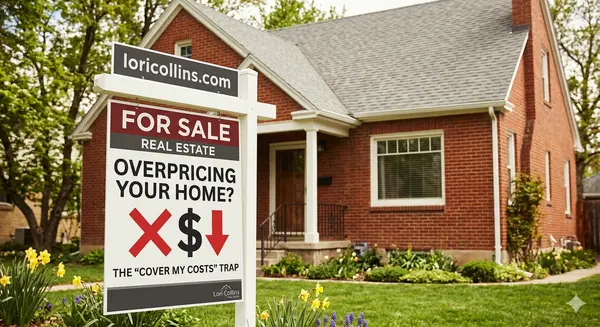
Pricing: You must conduct your own market research to ensure you aren't leaving money on the table or overpricing your home so high that it sits stagnant.
-
Marketing: You have to list the home on third-party sites (like Zillow or Facebook Marketplace) and manage all inquiries.
-
Showings: You must be available to walk strangers through your home, often on short notice, during evenings and weekends.
-
Paperwork: You are responsible for the legally binding contracts, disclosures, and addendums required by your state.
The primary appeal here is the potential to save the 2.5% to 3% commission typically paid to a listing agent. However, the "savings" often come at the cost of your time and potential exposure.
The Realtor Advantage: Professionalism and Exposure
On the other side of the coin is hiring a Licensed Realtor. This is a professional who is not only trained in the legalities of real estate but also has access to tools that the general public does not.
Why Professionalism Matters: A Realtor’s job begins long before the "For Sale" sign hits the yard. They provide professional photography, high-end videography, and staging advice to ensure your home looks its absolute best. In the digital age, your "first showing" happens online; if the photos are dark or messy, buyers will swipe past.
The Power of the MLS: The most significant advantage a Realtor offers is access to the Multiple Listing Service (MLS). This platform syndicates your home to thousands of websites and reaches every licensed agent in the region. While a FSBO sign might reach neighbors driving by, the MLS reaches every serious buyer currently searching in your price bracket. As a FSBO you can find services that will post your home on the MLS but there is more to it than that.
Upfront Costs and Risks: One of the most compelling points is the financial risk. When you hire a Realtor, they typically cover all marketing costs—professional photos, signage, digital ads—upfront. If the house doesn't sell, the agent loses that money, not you. You only pay for their services upon the successful closing of the sale.
The Negotiation and Legal Maze
One of the most overlooked aspects of selling a home is the negotiation. When a buyer submits an offer, they aren't just offering a price; they are offering terms, contingencies, and timelines.
A licensed Realtor acts as a buffer. They vet buyers to ensure they are actually pre-approved and qualified. They handle the back-and-forth "nitty-gritty" negotiations regarding repairs, closing costs, and appraisal gaps. Without a professional advocate, many FSBO sellers find themselves overwhelmed by aggressive buyer’s agents or savvy investors looking for a "deal" at the seller's expense.
Furthermore, the legal paperwork is a minefield. Real estate laws change frequently. A licensed professional ensures that all disclosures are handled correctly, protecting you from potential lawsuits long after the sale is finalized.
The Financial Reality: Net vs. Gross
Many sellers focus on the gross price of the sale, but what matters is the net—the amount of money that actually hits your bank account.
National statistics consistently show that homes sold with a Realtor tend to sell for a higher price than FSBO properties. The increased exposure often leads to multiple offers, which drives the price up. In many cases, the "premium" price achieved by a professional more than covers the cost of their commission, while also saving the homeowner hundreds of hours of labor.
Why 95% of Sellers Choose a Realtor
Roughly 95% of home sellers ultimately choose to work with a licensed Realtor. The reasons are simple: reduced stress, professional protection, and faster results.
While skipping a commission might look like a win on paper, every day a home sits on the market creates holding costs—recurring expenses like mortgage interest, property taxes, insurance, utilities, and HOA fees that eat directly into your final profit.
Professional Realtors often deliver faster results through broad MLS exposure and strategic pricing, which can save a seller thousands of dollars in these "hidden" monthly carrying costs. For example, if a home sits for an extra two months while a FSBO seller manages the process alone, the accumulated holding costs and potential for a "stale" listing price reduction can easily outweigh the commission they were trying to save.
Selling a home is a full-time job. Most homeowners already have full-time jobs, families, and personal commitments. Trying to manage the sale of a multi-hundred-thousand-dollar asset in your "spare time" can lead to burnout and costly mistakes.
If you’re ready to take on the challenge of selling your home yourself, you'll need to stay organized to avoid the common pitfalls that lead to "stale" listings or legal headaches.
This checklist includes Utah-specific requirements (like methamphetamine disclosures) and standard best practices for a successful FSBO (For Sale By Owner) sale.
Phase 1: Preparation & "The Look"
Before anyone sees the home, it must be indistinguishable from a professionally listed property.
-
[ ] Declutter & Depersonalize: Remove family photos and 30% of your furniture to make rooms look larger.
-
[ ] Deep Clean: Windows, carpets, and baseboards must be spotless.
-
[ ] Minor Repairs: Fix leaky faucets, squeaky doors, and chipped paint.
-
[ ] Curb Appeal: In Utah’s climate, ensure your xeriscaping or lawn is tidy and walkways are clear of snow or debris.
-
[ ] Professional Photography: Do not use a smartphone. Hire a real estate photographer (approx. $150–$300) to get wide-angle, high-dynamic-range shots.
Phase 2: Strategic Pricing
-
[ ] Run a "CMA": Look at "Sold" listings on Zillow or KSL from the last 90 days that have similar square footage and are in your school district. See nondisclosure info below
-
[ ] Get a Pre-Listing Appraisal: This costs $400–$600 but gives you an ironclad defense when a buyer tries to lowball you.
-
[ ] Calculate Your Net: Use a "Seller Net Sheet" to estimate your walk-away cash after paying off your mortgage and covering closing costs.
Phase 3: Marketing & Exposure
-
[ ] Flat-Fee MLS Service: This is the #1 tool for FSBO. For a few hundred dollars, they will put your home on the Multiple Listing Service so it shows up on Redfin, Realtor.com, and Zillow. The most reputable options for Utah sellers is Houszeo ($249 - $399); Flat Fee Group ($150 - $1999); helloReeve ($99); Best Choice Flat Fee ($199 - $399); Congress Realty ($399); IntermountainProperties ($99 - $199).
-
[ ] Local Classifieds: In Utah, listing on KSL Classifieds is essential.
-
[ ] Yard Sign: Don't use a generic "neon orange" sign. Buy a professional, clean-looking FSBO sign with a clear phone number and a QR code to the listing.
-
[ ] Social Media: Share the listing in local "Community" and "Real Estate for Sale" Facebook groups.
Phase 4: Vetting & Showings (Safety First)
-
[ ] Verify Pre-Approval: Never show your home to someone who hasn't sent you a Pre-Approval Letter from a lender.
-
[ ] Security: Hide all jewelry, prescriptions, and small electronics. Never do a showing alone if possible.
-
[ ] The "Showing Log": Keep a notebook of every person who enters, their agent's name, and their contact info for follow-up.
Phase 5: The Paperwork (The Legal Shield)
-
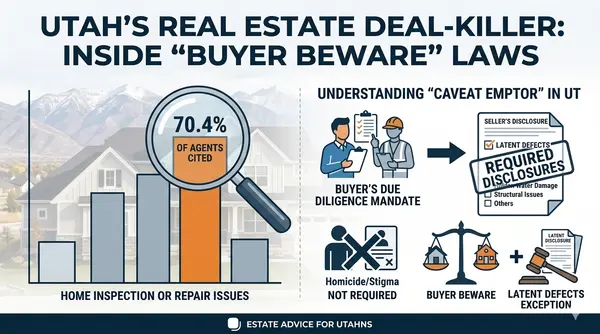
[ ] Seller’s Property Condition Disclosure: Utah law requires you to disclose known material defects (roof leaks, foundation issues, etc.).
-
[ ] Methamphetamine Disclosure: Utah-specific law requires you to disclose if the home has ever been contaminated by meth and not decontaminated to state standards.
-
[ ] Lead-Based Paint Disclosure: Federal law requires this for any home built before 1978.
-
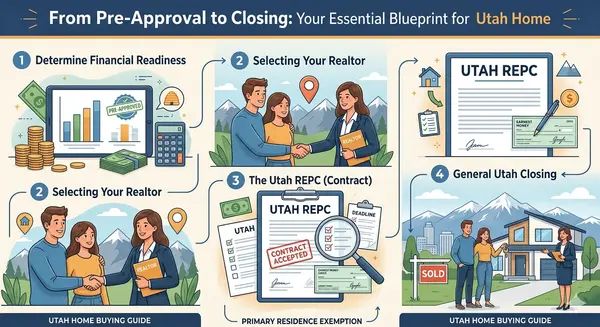
[ ] Real Estate Purchase Contract (REPC): You can find the standard Utah Association of Realtors REPC online. Familiarize yourself with every page.
Phase 6: Negotiation & Closing
-
[ ] Open a Title Escrow: Choose a local title company immediately. They will hold the buyer's Earnest Money in a neutral account (never hold it yourself).
-
[ ] Evaluate Contingencies: Look closely at the "Due Diligence" and "Financing" deadlines. A high price with a long contingency period can be riskier than a slightly lower cash offer.
-
[ ] Attorney Review: Since you don't have an agent, it is highly recommended to pay a real estate attorney for 1–2 hours of their time ($300–$500) to review the final contract before you sign.
*** In Utah, pricing a home is uniquely difficult because it is one of only a handful of "Non-Disclosure States." This creates a significant "information gap" that often leads to misinformation on popular sites like Zillow and KSL.
1. The "Secrecy" Problem
In most states, when a home sells, the final price is recorded in public government records. In Utah, however, state law prohibits county recorders from disclosing the final sales price to the public.
-
The Result: The government doesn't know exactly what your neighbor's house sold for, and neither does the public.
-
The Exception: Only licensed real estate agents have access to the MLS (Multiple Listing Service), a private database where members contractually agree to share actual "sold" prices with one another.
2. The Zillow "Zestimate" Trap
Because Zillow cannot see the actual sold prices in Utah, its algorithm is essentially "guessing" based on incomplete data.
-
Listing vs. Sold Price: Zillow primarily uses listing prices (what someone wants) rather than sold prices (what someone actually got). If a seller lists for $800k but eventually drops to $700k to make a deal, Zillow may still use that $800k figure to value nearby homes.
-
Market Lag: Zillow’s data often lags behind reality. In a shifting market, a "Zestimate" might reflect values from six months ago, leading FSBO sellers to overprice their homes and sit on the market for months.
3. Misinformation on KSL and Social Media
KSL is the go-to marketplace in Utah, but for real estate, it can be a source of "pricing echoes."
-
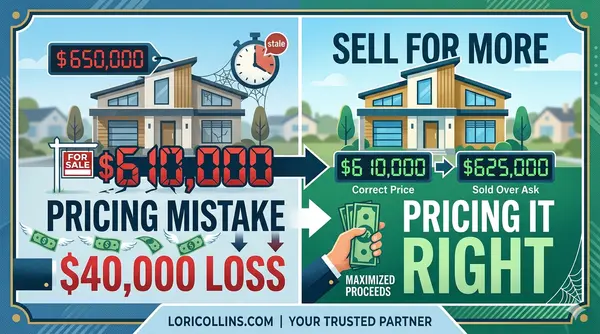
The Echo Effect: A FSBO seller sees three other homes on KSL listed for $650k. They list theirs for the same. What they don't see is that those three homes have been sitting for 90 days and will eventually sell for $610k.
-
False Comparables: Without the MLS, a seller can't tell if a "Sold" sign in the neighborhood represents a full-price cash offer or a deal where the seller had to pay $20k in buyer closing costs (effectively lowering the price).
Why This Matters for FSBO
If you are selling your own home in Utah, you are essentially flying blind. Using Zillow or KSL to set your price is like using a weather app that only shows you what the sky looked like yesterday.
The "Blind Spot" Risk: Overpricing by even 3% because of inaccurate Zillow data can lead to your home becoming "stale." In Utah's competitive market, buyers often assume a home that has been listed for more than 30 days has a "hidden defect," forcing you to eventually sell for even less than market value.
How the Process Works in Utah
-
Select a Package: Choose between "Entry Level" (just the MLS listing) or "Full Service" (includes help with negotiations and paperwork).
-
Upload to the MLS: You provide the photos and descriptions. The broker then lists it on the Utah Real Estate MLS (WFRMLS).
-
Automatic Syndication: Within 24–48 hours, your listing will automatically "push" to Zillow, Redfin, and Realtor.com.
-
Manage Leads: In most flat-fee models, the listing will state "Contact Seller Directly for Showings," meaning buyer agents will call you to schedule tours.
The "Price Gap" Warning
In Utah’s non-disclosure environment, most flat-fee services offer a CMA (Comparative Market Analysis) as a paid add-on. Buy it. Since you cannot see what homes actually sold for on Zillow or KSL, paying a broker $50–$100 to pull the "Sold" data from the MLS is the only way to ensure you aren't underpricing your home by $20,000 or overpricing it so much that it never sells.
One Critical Detail: The Buyer's Agent Commission
Even if you pay a flat fee to list your home, you should still offer a commission (typically 2% to 3%) to the buyer's agent. If you offer 0%, most agents will steer their clients away from your home, significantly shrinking your pool of potential buyers.
When a buyer's agent calls to schedule a showing, you aren't just the seller—you are the "gatekeeper." In Utah, because the market can be fast-paced, you need to filter out the "tourists" from the serious buyers.
Here is a list of the top 6 questions you should ask every agent before giving them the lockbox code or opening your door:
1. "Is your buyer pre-approved, and can you send the letter now?"
Why ask: In Utah, a "pre-qualification" is just a surface-level check. You want a Pre-Approval Letter, which means a lender has actually verified their income and taxes. Do not clean your house and leave for two hours for someone who can't actually afford the mortgage.
2. "Has your client seen the photos and the 'Non-Negotiables'?"
Why ask: If your home doesn't have a backyard or is on a busy street, make sure the agent has pointed that out. You don’t want to waste time on a showing for a buyer who "must have a quiet cul-de-sac" when you live near a main road.
3. "Does the buyer have a home to sell first?"
Why ask: This is called a Home Sale Contingency. In a competitive market like the Wasatch Front, these offers are much riskier. If their current home isn't even under contract yet, your "sale" could be delayed for months or fall through entirely.
4. "What is your client’s preferred timeline for closing?"
Why ask: If you need 60 days to move but their buyer needs to be in by the 15th of next month, you are fundamentally mismatched. Knowing this upfront saves a lot of headache during the negotiation phase.
5. "How many other homes has your client toured this week?"
Why ask: This helps you gauge their "temperature." If they've seen 20 homes and haven't made an offer, they might be "window shoppers." If your home is their first tour, they are just starting. The "sweet spot" is a buyer who has seen 3–5 homes and is ready to pull the trigger.
6. "Are you expecting a commission, and do you have a Buyer-Broker Agreement?"
Why ask: Due to recent national legal settlements, commissions are no longer "assumed." You need to be clear: "I am open to negotiating a buyer's agent commission as part of a strong offer, but I am not signing a listing agreement." This sets the professional boundary immediately.
Pro-Tip: The "Verification Call"
Once the agent gives you their name, take 30 seconds to look them up on the Utah Division of Real Estate website. Ensure their license is "Active." Occasionally, unlicensed "wholesalers" will pose as agents to try and tie up your property under a predatory contract.
When an agent calls or texts for a showing, you want to respond with a professional "Showing Instructions" template. This establishes that you are an organized seller and helps you screen out unqualified leads immediately.
Since most agents in Utah prefer texting for quick scheduling, you can save this template in your phone’s "Notes" or as a "Text Replacement" shortcut.
The FSBO Showing Instructions Template
Copy and paste the following:
"Hi [Agent Name], thanks for reaching out about [Property Address]! We are happy to host a showing for your clients. To keep things organized, please confirm the following:
Pre-Approval: Please text/email a copy of the buyer’s Pre-Approval Letter prior to the showing.
Time Slot: We have [Time/Date] or [Time/Date] available. Which works best?
Access: This is a ‘Seller-Hosted’ showing. I will meet you at the front door to let you in and then step out to the [backyard/patio] to give your clients privacy.
Commission: I am offering a [e.g., 2.5%] commission to the buyer’s agent, to be paid at closing.
Feedback: I’ll follow up via text 2 hours after the tour for your client's initial thoughts.
Looking forward to seeing you then! — [Your Name]"
Why this specific wording works:
-
The "Pre-Approval" Gate: By asking for the letter before the showing, you ensure you aren't wasting your time cleaning the house for someone who hasn't even talked to a bank.
-
The "Seller-Hosted" Note: Since you likely don't have a Supra Lockbox (which only agents can open), this tells the agent you’ll be there. Mentioning that you will "step out" puts the agent at ease—they usually hate it when the owner "hovers" during the tour.
-
The Commission Clarification: Stating your offer upfront makes you more attractive than other FSBOs who are vague about commissions.
-
The Feedback Loop: This sets the expectation that you are a serious seller who expects a professional response.
Pro-Tip for Safety:
If the agent is someone you’ve never met, you can add a small "Safety Verification" step: "Please text me a photo of your Utah Real Estate License or business card before I send the entry instructions." A legitimate agent will never be offended by this; in fact, they’ll respect your diligence.
And (of course I have too add...)
If managing the paperwork, vetting buyers, and navigating Utah’s tricky non-disclosure laws starts to feel like a full-time job you didn’t sign up for, don't worry—you don't have to go it alone.
If your FSBO efforts aren't yielding the results you expected, I am always available to step in and help. I would love the opportunity to meet with you, tour your home, and walk you through my specific professional approach to getting your property sold quickly and for the highest possible net price.
Categories
Recent Posts